

The hands that give color to your clothes: a journey into the workshops of Rajasthan
Inside the courtyards where Malini fabrics are born: the artisans you will never see, but will feel on your skin.
It is five in the morning in Bagru. The air still smells of the night, wet earth, burnt wood, a thread of jasmine from a nearby courtyard. In a workshop that opens onto the street without a sign, someone is already preparing the colors. A bucket of water, a handful of indigo powder, a wooden ladle turning slowly. In an hour this courtyard will be full of fabrics drying in the sun, and the silence will give way to a rhythmic beat: tac, tac, tac. The sound of wooden blocks meeting cotton. The sound of a craft that is centuries old.
In short
Behind every hand printed garment from Rajasthan there are at least four crafts: the carver who sculpts the wooden block, the printer who presses it onto the cotton, the dyer who prepares and fixes the colors, the tailor who builds the whole garment. In this article we step into their workshops, one by one.
🤲 The question that changes everything
“Who made my clothes?”
It is a simple question, yet most of us never ask it. We look at the label for the size, for the washing instructions, sometimes for the fabric. Almost never to find out who, in practice, touched that cloth before us.
And yet, behind every handmade garment there are hands. Not an assembly line, not a mechanical arm: the hands of people who rise early, who have known their craft for decades, who leave something of themselves in the fabric every day.
This article is not a news report. It is not an investigation. It is a journey, as close as possible to the courtyards, the looms, the printing tables where the fabrics that become the clothes you wear are born. A journey among crafts handed down through generations and worlds that are changing.
🪵 The carver: where it all begins

The first artisan to touch a fabric does not touch the fabric at all. They touch the wood.
In a corner of the workshop, far from the noise of printing, sits the one who carves the blocks. Teak, chosen for its hardness. Chisels of every size, some as thin as needles. And a design, sometimes traced in pencil, sometimes carried in memory.
Carving a printing block takes days. A complex floral motif can take a week. The design is carved in negative: what remains in relief is what will print. An error of half a millimeter, and the motif will not repeat correctly when the block is laid hundreds of times on the same meter of cloth.
Those who carve are never in a hurry. They cannot be. Theirs is perhaps the quietest craft in the whole workshop, and the most decisive: without the block, there is no print.
Many of these designs are not born from scratch. They are variations of motifs that have existed for generations, such as flowers, sacred geometries and paisley, passed down from father to son like a visual language. If you want to discover the great traditions behind these motifs, we have told their story in our article on Indian block print.
🎨 The printer: the rhythm that becomes a pattern

When the block is ready, it passes into the hands of the printer.
Here the workshop changes rhythm. The printing tables are long, low and padded. The cotton is laid out and stretched with care. Beside it, a shallow tray full of color, often a thick paste made from natural pigments.
The printer dips the block, places it on the fabric and strikes, a sharp blow with the palm of the hand. The color transfers. The block lifts, moves a few centimeters, and the gesture repeats. Tac, tac, tac. Hundreds of times per meter. If the design has three colors, everything starts again from the beginning with a different block for each one.
The point where one strike ends and the next begins must be invisible. The alignment is done by eye and by hand, no laser, no mechanical guide. Only the experience of someone who has repeated that gesture for years and knows, in the body before the mind, where to place the block.
And this is where something is born that many call “imperfection”, when in fact it is the opposite: it is proof that the fabric has passed through human hands. No two prints will ever be identical. Every centimeter carries the signature of that day, that hand, that light.
🌿 The dyer: the silent chemistry

There is one artisan in the workshop almost nobody talks about: the dyer.
Their work begins before printing and continues after it. They prepare the dye baths, indigo from leaves, red from madder, yellow from turmeric, black from iron and molasses. Every color has its own recipe, its own temperature, its own immersion time.
The dyer knows the water. They know that the water of one village gives a different tone from that of the next, because the minerals change. They know that the same indigo, worked on a rainy day, will give a different blue from that of a dry, sunny day. Theirs is a chemistry of the earth, made of intuition and experience as much as formula.
After printing, it is the dyer who washes the fabric, fixes the colors and makes them stable. An invisible step, yet without it the first wash would carry everything away. If you want to discover which plants and minerals these colors come from, we have told their story in Colors born from the earth.
✂️ The tailor: the last to touch
The last artisan to touch the fabric before you is the tailor.
In an artisan workshop, the tailor is not a link in an assembly line. They are a person who builds the entire garment from beginning to end. They cut following the printed design, so that the motif does not break where the panels meet. They sew respecting the fall of the fabric. They finish the edges. They check the seams.
They know that garment. They have watched it come to life piece by piece. They know how it will fall, where the fabric will pull, where an extra centimeter of margin is needed. They are not following an instruction: they are building something.
If you have ever wondered how many crafts it takes to bring a single garment to life, how many hands it passes through before reaching your wardrobe, we have traced that journey in the true cost of a handmade garment.
⌛ The gesture that repeats
There is something all these artisans share, from the carver to the tailor: repetition.
Not the mechanical repetition of a machine, but that of a musician who plays the same piece thousands of times and each time puts something different into it, an intensity, a nuance, a breath.
The printer strikes the block eight hundred times a day. The carver has been carving the same kind of curve for thirty years. The dyer immerses the fabric in the same indigo bath their father prepared with the same recipe. And yet no day is like another, because the cotton changes, the humidity changes, the tired hand of the afternoon is not the fresh hand of the morning.
The imperfection that is born from this is not a flaw. It is the signature of human time imprinted on matter. It is the difference between a garment that is made and a garment that is produced.
🔄 When the children choose another path

In the workshops of Rajasthan something is happening that deserves to be told without rhetoric.
Many artisans' children do not want to continue their fathers' craft. They study computer science, engineering, marketing. They choose the city, the fixed salary, the air conditioning. It is not a betrayal, it is life changing, as it changes everywhere in the world.
But when a sixty year old carver has no apprentice, his knowledge risks stopping with him. It is not knowledge that can be written in a manual: it lives in the hands, in the rhythm, in an intuition built over decades of practice.
This is not a drama to be told to move you. It is a reality to know, so that we can give proper value to what still exists. Every time you choose a handmade garment, you also choose for that craft to keep making sense, economically, socially, humanly.
🧶 In the Malini world
The workshops Malini works with are not anonymous suppliers found at a trade fair. They are places we know, places we visit, where relationships have lasted for years.
We do not ask our artisans to lower their prices or speed up their pace. We ask the same thing we would ask of any artist: do what you know how to do, at the pace it takes to do it well. And the fair price is the one that allows those who work to live with dignity.
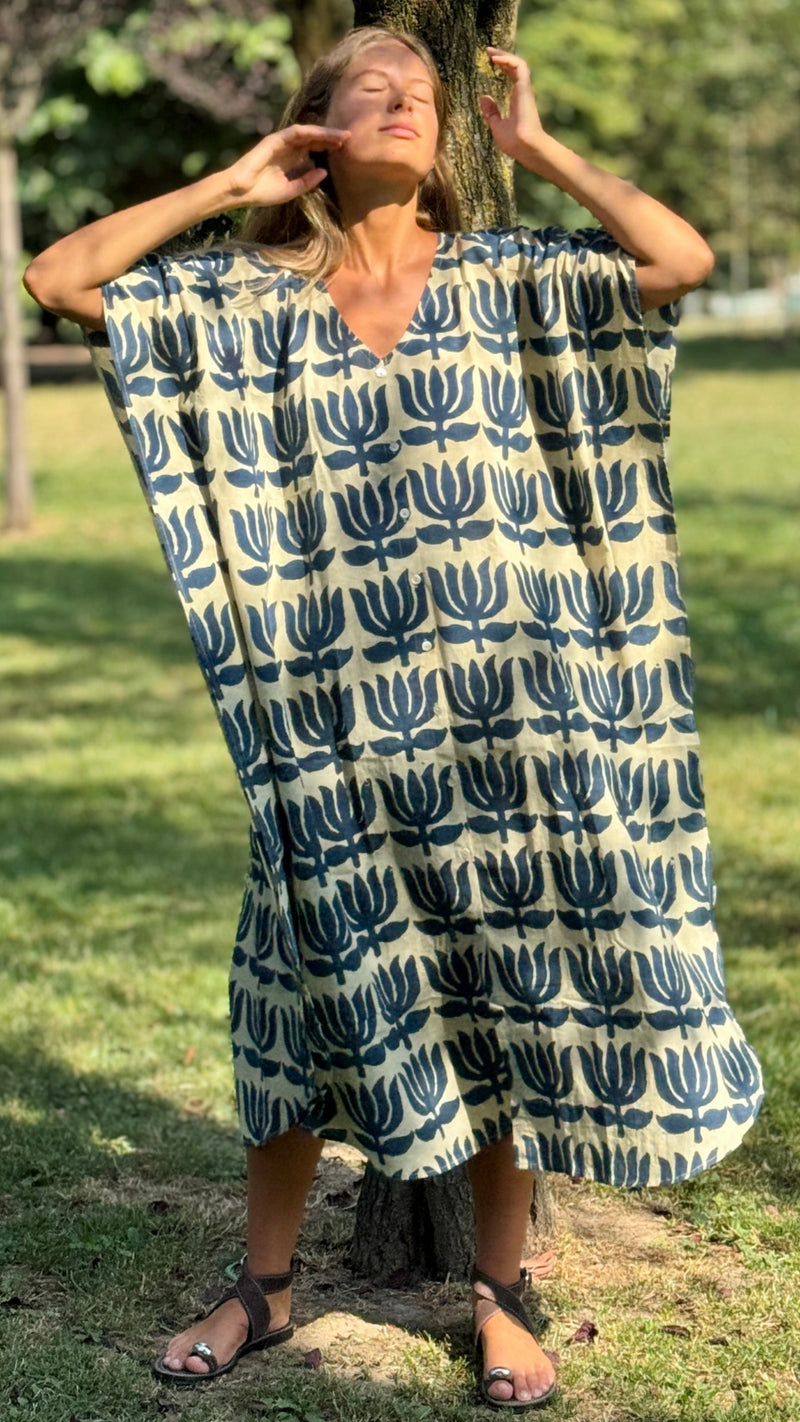
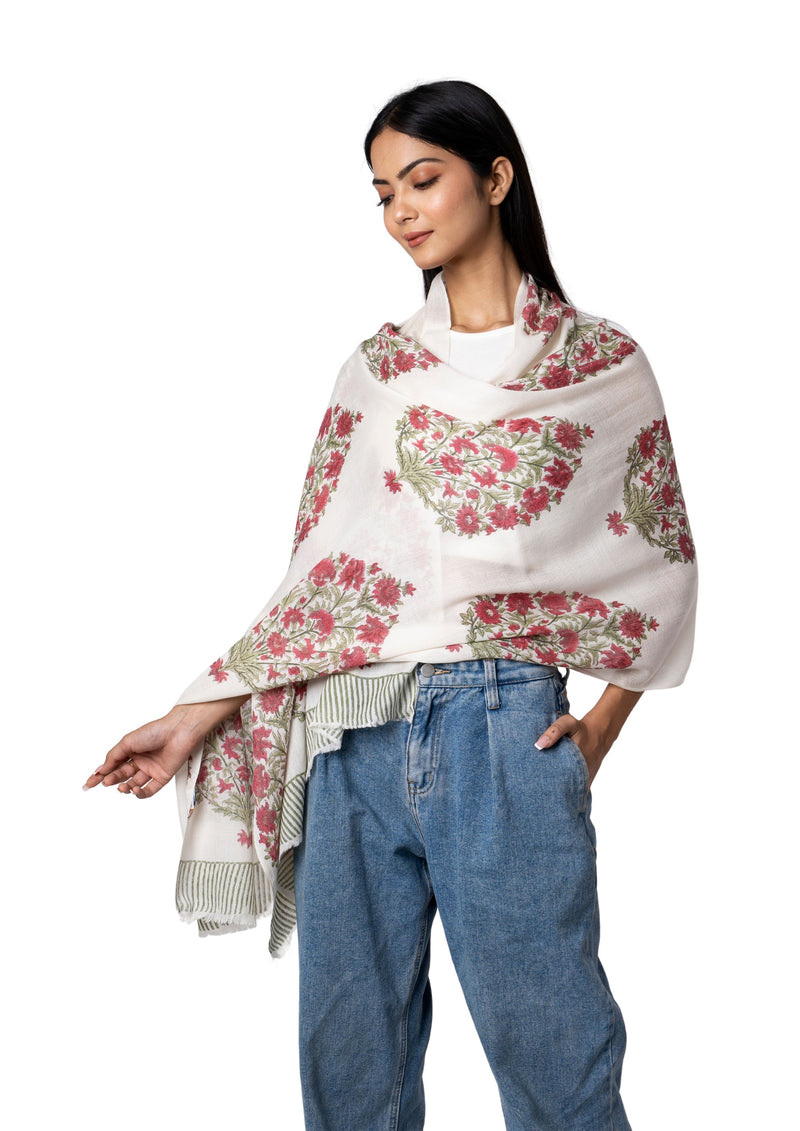
The kaftans and scarves you find in our shop carry this whole journey with them. From the workshop courtyard to your skin, every piece has passed through hands that know their craft, and that practice it with a pride no label can describe.
If you want to follow the journey of a single garment along this chain, from the teak block to the wardrobe, we have told it step by step in the story of the Indian block print kaftan.
❓ Frequently asked questions
Who works behind a hand printed garment from Rajasthan?
At least four crafts: the carver who sculpts the teak block, the printer who presses it onto the cotton stroke after stroke, the dyer who prepares the dye baths and fixes the print, the tailor who cuts and sews the whole garment.
How long does it take to carve a block for block printing?
Days of work, and up to a week for a complex floral motif. The design is carved in negative, and an error of half a millimeter is enough for the motif not to repeat correctly on the cloth.
Why are no two hand printed garments ever identical?
Because every block is placed by eye and by hand, hundreds of times per meter, without mechanical guides. The small differences in pressure, color and alignment are not flaws: they are the signature of whoever printed that fabric, on that day.
Which natural colors do Indian dyers use?
Among the oldest: indigo from leaves for blue, madder for red, turmeric for yellow, iron and molasses for black. Every color has its own recipe, its own temperature and its own immersion time.
The next time you wear a Malini piece, close your eyes for a moment. Feel the cotton on your skin, the softness that only handmade fabric can give. That fabric has been touched by many hands before yours, hands you will never know, but that worked so that the garment would be exactly as it is: real, imperfect, and made for you.
The Malini team, between Italy and the artisan workshops of India: we only write about what we have seen and touched with our own hands. Discover who we are →